Note: This story was updated at 2:03 p.m.
Early voting for the Nov. 6 election ends today, and the ballot includes five candidates running for three seats on Oak Ridge City Council.
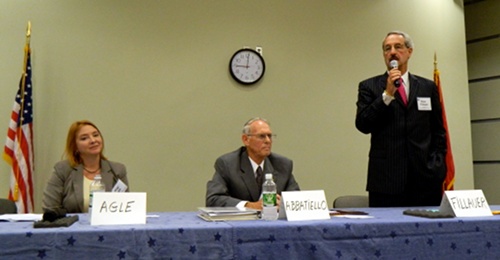
The five candidates were asked to define the city’s biggest problem during a League of Women Voters forum last month. Two named revenues, one mentioned housing, another talked about repopulating the city as the original generation ages, and the last said the city is too expensive.
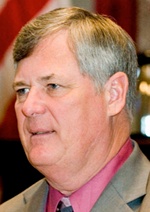
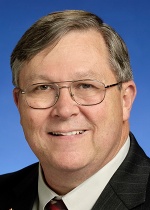
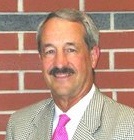
The five candidates are the three incumbents—Charlie Hensley, Chuck Hope, and Ellen Smith—and two challengers, Trina Baughn and Kelly Callison.
Baughn, a communications professional, said she thinks the city’s No. 1 problem is that it’s too expensive. City officials need to need to level the playing field and can’t “pick and choose” between developers, Baughn said.
She said Oak Ridge has a large percentage of subsidized housing, and she’s not sure why the number of those units keeps expanding.
City officials have tried to reduce the number of blighted homes in Oak Ridge, but Baughn said a distinction needs to be made between blighted homes and legacy homes.
Callison, a business executive, said the No. 1 problem is housing. It’s affecting crime, schools, and the ability to attract new people to Oak Ridge, he said.
Callison said he’s a strong proponent of the “Not in Our City” program, which is meant to prevent crime and clean up neighborhoods, as well as a program that permits home inspections before utilities are turned on.
He said housing, schools, and new commercial development are all tied together, and housing needs to be tackled first.
Hensley, a retired engineer, said the No. 1 problem is revenue flow. He said the city’s debt is a symptom of the lack of revenue flow.
The new Kroger Marketplace shopping center at Oak Ridge Turnpike and Illinois Avenue could produce the equivalent of about 15 cents on the property tax rate, Hensley said. If the Oak Ridge Mall were redeveloped, it could about double that revenue increase, he said.
Hensley said new revenues could be used to pay down the municipal debt, and he also emphasized commercial development and a “positive attitude.” He said housing and new jobs ought to bring in more new residents.
Hope, a business owner, said he prefers to view the city’s No. 1 problem as a challenge, as opposed to a problem. The main challenge is increasing sales tax revenues, Hope said.
Federal facilities in Oak Ridge account for more than $3 billion in spending each year, and it’s the second largest economic driver in the state, Hope said. But Oak Ridge residents need to be ready for possible reductions in federal programs and capitalize on niche technologies produced at Oak Ridge National Laboratory.
Hope said he would like to set a goal of generating $1 billion in new revenues in Oak Ridge in the next 12 years while also creating 4,500 new jobs.
Smith, a research staff member at Oak Ridge National Laboratory, also said she prefers to regard the city’s top problem as a challenge. She said the main challenge is to repopulate the city as the original generation passes on. Oak Ridge was built about 70 years ago during World War II as part of the top-secret Manhattan Project.
Housing is part of that challenge, Smith said, and City Council needs to take action to define a relatively new land bank program.
Smith said she believes Oak Ridge is “turning the corner” on crime and neighborhood blight, and officials and residents need to sell the city as a wonderful place to live.
The candidates were asked how they might cut government expenses.
Smith said there aren’t many opportunities for the city to cut expenses, but City Council members have been interested in discussing ways that the city government and school system could share services such as maintenance and information technology
“If we sit down and work together, we could find some opportunities,” she said.
The city could also find ways to reduce its energy consumption, although that would require an up-front investment, Smith said.
Hope agreed with Smith that the use of shared services between the city and schools could save money.
The city also needs to stick to its capital improvement plan and find ways to appropriately streamline costs, he said.
And some city services could become fee-based, he said.
Hensley said cutting expenses is very difficult right now.
“What we’re essentially looking at is cutting services to reduce expenses,” he said.
He said he would rather grow the economy than cut services. He suggested the proposed $6.5 billion Uranium Processing Facility at the Y-12 National Security Complex could help, with the management there offering to help recruit businesses.
In regard to shared services, Callison said the school system has had some concerns with that proposal, wondering who would get priority in some situations involving the city government and school system.
Bringing in new businesses will help increase the amount of taxes collected in Oak Ridge, Callison said.
And mixed-use development—combining residential and commercial spaces in one development, for example—would allow the city to get more use out of one particular location, Callison said.
Baughn said the city has generally always spent more money. One million dollars is spent each year on organizations that are supposed to help economic development, she said.
“We’re going to have to cut,” Baughn said.
She said the Oak Ridge Convention and Visitors Bureau operated 15 percent under budget, but still spent the money, even though it didn’t have to. If residents don’t demand that tax dollars be used efficiently, government officials won’t ensure that it is, Baughn said.


Follow Us