Guest column: America needs ‘purple ideas’ to solve national problems

The election a week ago had been called the most important in our country’s history, and if you are like me, you were more than ready for it to be over. The extreme polarization of our nation has never been more real than it is today. Attack ads, mudslinging, lies, distortions, empty promises, and more than a billion campaign dollars have worn down the American people.

I wonder when we will see our political system mature past grade-school tactics so that we can come together and develop real solutions to the very real and serious issues that face us as a people.

Unfortunately, we are not viewed as Americans anymore, but as Democrats, Republicans, and Independents. Instead of seeking truth and commonality, we are being led down a destructive road of allegiance to ideology rather than allegiance to this great nation we live in. The labels and language that now proliferate are divisive and derisive. What ever happened to “We the People”?

Let’s face it. We are up against a massive tide of problems that threaten our future. Massive debt compounded by out-of-control spending. Public health epidemics, such as obesity, that cause already high health care costs to rise even more. Infrastructures like bridges, power plants, drinking water piping, and wastewater treatment have received near failing grades from the American Society of Civil Engineers. (The ASCE 2009 Infrastructure GPA was a D.) Gas and food prices have escalated significantly in recent years, squeezing ever-tightening family budgets. Environmental concerns escalate as we continue to realize the consequences of our decisions.

Our morality has taken a nose dive to the depths of our infrastructure’s GPA…or lower. More than 20 million are unemployed and under-employed. And our national security (physical, fiscal, and technological) seems shaky at best. But what do we do?

We lack the leadership to tackle these issues in a truly bipartisan manner, and there is no sign of that changing. Our political leaders continue to fall in line with their respective parties, whether it is good for the country or not. Even our journalists, who have traditionally been viewed as the fourth branch of government, spout ideology rather than truth.

We have been painted up as red states and blue states. But I believe that there is a growing majority of us that long to be painted a different color, one that looks past party affiliation and realizes that the issues we face are American issues. Oh, for a renewed view of America that blends red and blue together and emerges united and together…that is purple. We need purple ideas to solve the purple problems that are before us.

This election was important as the two candidates for president, Barack Obama and Mitt Romney, offered very different visions for what America would look like. As with every vote, it was important for each voter to choose the candidate that aligned most closely with their individual principles and ideals. But now that it is over, it is vital for us to embrace each other as brothers and sisters, looking past ideological barriers that have constrained us, so that we can move forward united, strengthened by the diversity that has always made the United States of America a great nation. It is in the color purple that we will find ourselves again.

Kevin P. Bradford

Oak Ridge

Oak Ridge mayor, mayor pro tem seek re-appointment

The city’s mayor and vice mayor are both seeking to be re-appointed to two-year terms when the new City Council meets on Dec. 10.

Oak Ridge Mayor Tom Beehan and Mayor Pro Tem Jane Miller have both written to their fellow City Council members, asking to be re-appointed. (Beehan’s letter is here, and Miller’s is here.)

The mayor and mayor pro tem are not elected by voters in Oak Ridge. Instead, they are appointed by the seven-member council after each regular municipal election.

A new council was elected Nov. 6. One on the incumbents, Ellen Smith, lost in her re-election run, and two other incumbents, Charlie Hensley and Chuck Hope, were re-elected. They will be joined by new council member Trina Baughn.

The mayor leads council meetings, serves as the ceremonial head of the city, and signs ordinances, resolutions, bonds, and contracts, among other things. The mayor votes at council meetings but has no veto power.

The mayor pro tem fills in for the mayor when the mayor is absent or disabled.

Beehan has been mayor since July 2007. Before that, he was mayor pro tem for six years.

Miller has been mayor pro tem since July 2007.

Beehan has been a council member since 2001, and Miller has served since 2003.

The other two council members are Anne Garcia Garland and David Mosby. Council members serve staggered four-year terms, so three are elected in one municipal election, and then, two years later, four more are elected.

The Dec. 10 council meeting starts at 7 p.m. in the Oak Ridge Municipal Building Courtroom.

Letter: Mayor seeks re-appointment

(Note: The following is a letter that Oak Ridge Mayor Tom Beehan sent to his fellow City Council members.)

Congratulations to the winners of Tuesday’s Oak Ridge City Council election. You worked hard, and now you will work even harder as we come together on City Council to continue to move Oak Ridge in a positive direction.

It has been an honor and privilege to serve as the mayor of Oak Ridge for the last five years.

[Read more...]

Letter: Mayor pro tem seeks re-appointment

Jane Miller

Jane Miller

(Note: This is a copy of a letter that Oak Ridge Mayor Pro Tem Jane Miller sent to her fellow City Council members.)

Dear Members of City Council:

By submission of this letter, I am formally announcing that I intend to seek re‐election to the position of mayor pro tem on Dec. 10.

First, I welcome and congratulate Ms. Baughn on her election. She will bring new and different ideas to the Council. I also congratulate Mr. Hensley and Mr. Hope on their successful re‐elections. Although we are diverse and have a variety of opinions on various issues, I believe we will collectively continue to make good decisions to move our City forward.

[Read more...]

Guest column: Oak Ridge has growth potential in sales tax revenue

Editor’s note: The following is an edited version of a statement Oak Ridge City Council member Chuck Hope made during a candidates forum before the Nov. 6 election.

Why do I want to be on City Council? Because Oak Ridge has given me so many opportunities and provided for my family for over 30 years, I want to make sure that the next generation has those same opportunities.

How do we make sure those opportunities are available for the next “Oak Ridgers”?

We start by making sure we keep a close watch on our revenue and expenditures. We need to understand that we really only have two main sources of revenue that come into the city. They are our property taxes and our sales tax revenue.

As most of you know, our property tax rate is higher than our surrounding cities and towns. However, compared to other “full service cities,” ours is comparable. There are only a handful of these “full service cities” all across Tennessee.

But before we can start to really change the rate, we must first find revenue from other sources. Where we have the most potential for growth in revenue is in the sales tax revenue we generate. For a city our size and with the economic drivers that we provide to the region, we should be bringing in a substantially larger portion of sales tax revenue.

We must find ways to increase our sales tax revenue before we can start to reduce our property tax rate. This is where I will focus my energy. To do that, we must continue to find ways to bring in more retail options (both restaurants and shopping choices), continue to work closely with the Industrial Development Board, Chamber of Commerce, and Economic Partnership to bring additional private investment capital and jobs, then make sure the Economic Diversification Fund is working for us.

Once we get the sales tax revenue growth improving, we can then start to look at ways to reduce our property tax rate so we can be competitive within our region. All the while making sure we are diligent and remember our expenditures and stay within our annual budget. We are always looking for ways to streamline our costs while maintaining our quality-of-life services.

But one of our biggest attributes the city needs to pay close attention to is our school system. It is still the biggest reason young families come to Oak Ridge, and it is the benchmark all other education systems set the bar to. But if we don’t continue to work with the school board and find solutions to some real issues before us, other communities will close the gap, and we may never be able to set the bar high enough again.

As you can see, City Council has many challenges before them, and I believe I can contribute to finding solutions to these issues. With your support and input, I will bring my business sense to council.

Chuck Hope

Oak Ridge

Letter: New City Council member gives thanks

To the Editor:

I would like to thank the citizens of Oak Ridge for allowing me to represent them on City Council. I am both honored and excited to go to work for you. I am eager to work with my fellow council members, the city manager and the city staff to make Oak Ridge more affordable for residents and businesses.

I would also like to extend my heartfelt gratitude to Ellen Smith for her five years of service on council. She dedicated a tremendous amount of herself to the betterment of Oak Ridge without expectations of praise or notoriety. She is a woman of absolute integrity for whom I have the utmost respect, and I wish her nothing but the best.

Finally, I would like to thank my family, friends, and other supporters (some of whom I’ve never even met) for their hard work and dedication over these last eight months. I had the most amazing people backing me and am absolutely humbled at how much time and effort you sacrificed to help me win. I thank you all for believing in me and am ready to make you proud!

Trina Baughn

Oak Ridge

Oliver Springs liquor vote, Norris Council race remain close

Unofficial results from Tuesday’s election remained close on an Oliver Springs liquor referendum and the race for a fifth seat on the Norris City Council, and it wasn’t clear how provisional ballots could change the final vote tallies.

Oliver Springs voters appeared to have rejected the liquor referendum, with 486 voting yes and 519 voting “no” in Anderson and Roane counties. The referendum would allow package stores to sell alcoholic beverages.

But there are about 50 provisional ballots in Anderson County and an unknown number in Roane County, election officials said Wednesday. It wasn’t clear how many of those were from Oliver Springs, or how the ballots and a post-election audit might affect the final vote when results are certified Nov. 19.

Results in the race for four of the five seats on Norris City Council seemed clear. Chris Mitchell, Bill Grieve Jr., Loretta A. Painter, and Jack Black all received more than 500 votes, according to the unofficial results.

But the write-in race between four candidates competing for a fifth seat was close. York Haverkamp had 166 write-in votes and Eugene F. Oates had 154.

Anderson County Election Commission Administrator Mark Stephens said the write-in ballots will have to be checked vote by vote.

“We have really never had to do this in the past,” he said.

In other races in Anderson County, Steven R. Emert received the most votes in the special election to represent District 3 on Anderson County Commission. That district includes Andersonville, Fairview, Norris, and Glen Alpine. Former commissioner Johnny Alley resigned from the seat after he was elected Anderson County property assessor in the Aug. 2 election.

Also Tuesday, Shain Vowell and Andrew Howard won two seats on Lake City City Council, Vowell with 231 votes and Howard with 191.

Most of the other results mirrored results in larger regions, with the exception of the presidential race. Republican Bob Corker beat Democrat Mark E. Clayton in the U.S. Senate race, Republican Chuck Fleischmann defeated Democrat Mary M. Headrick in the battle to represent Tennessee’s Third District in the U.S. House of Representatives, and Republican Dennis Powers trounced Independent Virgil Kidwell.

Except for Smith, incumbents re-elected in Oak Ridge, state House

John and Liz Ragan

Tennessee Rep. John Ragan, an Oak Ridge Republican, pictured at right, and Liz Ragan, his wife, celebrate the legislator’s re-election to the Tennessee House at the Buffalo Mountain Grille on Tuesday night.

It was a good night for incumbents in five local races in Oak Ridge and the Tennessee House and Senate. With one exception, they were all re-elected.

Chuck Hope and Charlie Hensley had hundreds of votes to spare as they easily won re-election to Oak Ridge City Council. Keys Fillauer and Angi Agle, the two incumbents on the Oak Ridge Board of Education, also coasted to victory.

Tennessee Rep. John Ragan, an Oak Ridge Republican, won a narrower victory over former Rep. Jim Hackworth, a Clinton Democrat. Ragan received 699 more votes than Hackworth, according to unofficial results. He finished ahead by 51.4 percent to 48.6 percent.

The one newcomer elected Tuesday was Trina Baughn. She will join Hope and Hensley to serve on Council.

Gone will be incumbent Ellen Smith, who was soundly defeated. Hope and Baughn each finished ahead of Smith by more than 2,000 votes, according to unofficial results in Anderson and Roane counties.

Baughn first campaigned for a City Council seat in an August special election, when she lost to Hope. Hope was appointed to Council last summer after former member Tom Hayes resigned.

Baughn and Hope both said the August special election helped prepare them for Tuesday’s municipal election.

Midtown Polling Station

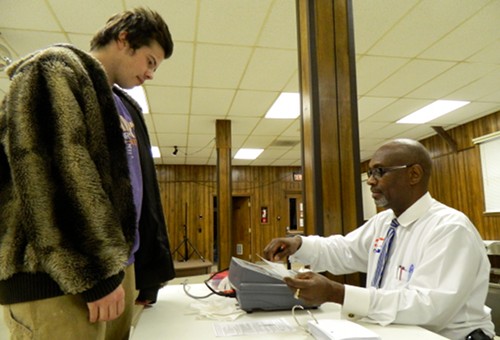
Andrew McCulloch, right, signs in at the Midtown Community Center polling station on Tuesday. Also pictured are poll workers Margaret Terrell, left, and Jim Young.

The training paid off. Hope finished first Tuesday with 6,887 votes, and Baughn was second with 6,739, according to the unofficial results.

Baughn, a communications professional, credited hard work and the efforts of some 20 to 50 volunteers making phone calls and visiting voters.

“We knocked on doors, and we went to the voters,” said Baughn, who is perhaps best known for her newspaper columns and work challenging city and school system spending. “The supporters that I have are elated that I won.”

Top priorities for the new council member are controlling spending, lowering the property tax rate, and reducing the city’s debt.

Hope, owner of Chuck’s Car Care, was not available for comment late Tuesday night.

It was a disappointing night for Smith, who served one term on City Council. She collected 4,624 votes.

“The results are surprising, and I don’t understand them,” said Smith, a research staff member at Oak Ridge National Laboratory. “I was pretty roundly defeated.”

A fifth candidate, business executive and Oak Ridge planning commissioner Kelly Callison, finished fourth in the City Council race, with 5,450 votes.

Campaign Signs at Midtown Community Center

David Hughes, left, supports presidential candidate Gary Johnson and Sherry Bath supports Oak Ridge Board of Education candidate Keys Fillauer at Midtown Community Center on Tuesday.

In the school board race, Agle and Fillauer both trounced Leonard Abbatiello, a former Oak Ridge City Council member, by more than 2,000 votes.

“I’m thankful that the people of Oak Ridge put the priority on students because that was the focus of my campaign and the focus of Keys’ campaign,” said Agle, who was battling for a third term.

Like Baughn, Agle credited door-to-door campaigning for her win, as well as her daily work during early voting and the newspaper articles she’s written during the past few years.

Now, she said, the first priority of the school board is to select a new superintendent, possibly on Dec. 8. Tom Bailey, the current superintendent, is retiring at the end of the year.

Agle said she also wants to continue making improvements in school curricula and student performance.

It was the second time Ragan and Hackworth ran against each other in the state’s 33rd District, which includes most of Anderson County. Ragan beat Hackworth in the 2010 election.

Midtown Community Center

Jake Phillips supports Tennessee Rep. John Ragan at the Midtown Community Center polling station on Tuesday.

This year’s contest between the two men was one of a half-dozen key races in the Tennessee House of Representatives, and it was expected to help Republicans gain a supermajority.

“I knew it was a close race,” Ragan said in a Tuesday night celebration at Buffalo Mountain Grille in Oak Ridge. “It was a hard-fought race.”

Ragan, a retired Air Force pilot, said Republicans in the Tennessee General Assembly have cut spending and taxes, and created a more job-friendly environment. Jobs and education will remain top priorities for him in the upcoming legislative session, Ragan said.

Another local incumbent who was re-elected was Oak Ridge City Judge Robert A. McNees III. He had no opposition.

Neither did Tennessee Sen. Ken Yager, who was re-elected in the 12th Senatorial District. Yager’s district includes Roane, Morgan, Rhea, Scott, Campbell, and Fentress counties.

In other elections, the vote on a liquor referendum to allow package stores to sell alcoholic beverages in Oliver Springs appeared to have been rejected, with 486 voting yes and 519 voting “no” in Anderson and Roane counties.

Three-quarters of Clinton voters agreed to move the city’s general elections from December of odd-numbered years to November of even-numbered years, when they will coincide with state and federal elections.

Republican Kent Calfee defeated Democrat Jack W. McNew by a 68.6 percent to 26.7 margin in Roane County for a chance to represent the 32nd District in the Tennessee House, according to unofficial Roane County results. The district includes Roane County and part of Loudon County.

Unofficial results showed Calfee, who beat the incumbent, Julia Hurley, in the August primary, had an even higher victory margin in Loudon County: 72.4 percent to 20.8.

Here are highlights of Tuesday’s unofficial results in Anderson and Roane counties:


Oak Ridge City Council

Hope—6,887

Baughn—6,739

Hensley—6,301

Callison—5,450

Smith—4,624


Oak Ridge Board of Education

Agle—7,738

Fillauer—7,495

Abbatiello—4,988


Tennessee House of Representatives, 33rd District:

Ragan, Oak Ridge Republican—12,825 (51.4 percent)

Hackworth, Clinton Democrat—12,126 (48.6 percent)


Oliver Springs liquor referendum (To allow retail package stores to sell alcoholic beverages in the city of Oliver Springs):

Yes—486

No—519


Clinton charter question (To move Clinton general elections from December of odd-numbered years to November of even-numbered years):

For—2,556 (75.7 percent)

Against—819 (24.3 percent)


Note: This story has been corrected to show new vote totals for Ragan and Hackworth.

Election leaders: Baughn, Hensley, Hope; Agle, Fillauer; Ragan

Note: This story was updated with unofficial voting results at 12:54 a.m. Nov. 7.

With 51 of 53 precincts reporting in Roane and Anderson counties, Trina Baughn, Charlie Hensley, and Chuck Hope have commanding leads over Kelly Callison and Ellen Smith in the race for three Oak Ridge City Council seats.

Angi Agle and Keys Fillauer, both seeking re-election to the Oak Ridge Board of Education, had large leads over challenger Leonard Abbatiello, a former Oak Ridge City Council member. There are two seats available.

Meanwhile, Tennessee Rep. John Ragan, an Oak Ridge Republican, held a 696-vote lead (51.4 percent to 48.6 percent) over his challenger, former Rep. Jim Hackworth, a Clinton Democrat. It is considered one of a half-dozen key races in the Tennessee House of Representatives and could help decide whether Republicans gain a supermajority, which means they could conduct business even if Democrats walk out.

The vote on a referendum to allow retail package stores to sell alcoholic beverages in Oliver Springs remained very close, with 360 voting yes and 357 voting no.

Three-quarters of Clinton voters agreed in a referendum Tuesday to move the city’s general elections from December of odd-numbered years to November of even-numbered years.

Here are the unofficial results we have so far from Anderson and Roane counties:

Oak Ridge City Council

Hope—6,882

Baughn—6,735

Hensley—6,297

Callison—5,445

Smith—4,621

Oak Ridge Board of Education

Agle—7,733

Fillauer—7,493

Abbatiello—4,984

Note: The total number of votes cast for Keys Fillauer has been updated. An earlier version of this story contained an incorrect number.

More information will be added as it becomes available.

Live election results posted, early totals available

Midtown Community Center Voting

Rex Sanders, left, picks up his voting machine code before casting a ballot at the Midtown Community Center on Tuesday afternoon. Also pictured is poll worker Dave Anderson.

Note: This story was last updated at 9:37 p.m.

Voting results are being posted on the Anderson County Election Commission website.

The results below, which include early voting and absentee ballots, will be updated, and we’ll post the new numbers here as we can.

The following results include 26 of 28 precincts in Anderson County. We’ll add Roane County election results as we can. The early voting and absentee ballot results in Roane County don’t contradict the current Anderson County results in the Oak Ridge City Council or Board of Education elections, or the Oliver Springs liquor referendum.


Oak Ridge City Council (five seats):

Trina Baughn—5,842 (23 percent)

Kelly Callison—4,641 (18.3 percent)

L.C. “Charlie” Hensley—5,298 (20.9 percent)

Charles J. “Chuck” Hope Jr.—5,718 (22.5 percent)

Ellen Smith—3,909 (15.4 percent)


Oak Ridge Board of Education (two seats):

Leonard Abbatiello—4,287 (24.9 percent)

Angi Agle—6,603 (38.4 percent)

Keys Filauer—6,319 (36.7 percent)


Tennessee House of Representatives, 33rd District:

John Ragan, Oak Ridge Republican—12,810 (51.4 percent)

Jim Hackworth, Clinton Democrat—12,114 (48.6 percent)


Oliver Springs liquor referendum (To allow retail package stores to sell alcoholic beverages in the city of Oliver Springs):

Yes—360 (50.2 percent)

No—357 (49.8 percent)


Clinton charter question (To move Clinton general elections from December of odd-numbered years to November of even-numbered years):

For—2,556 (75.7 percent)

Against—819 (24.3 percent)

Council candidates say city’s cost, housing, revenues are top issues

Note: This story was updated at 2:03 p.m.

Early voting for the Nov. 6 election ends today, and the ballot includes five candidates running for three seats on Oak Ridge City Council.

The five candidates were asked to define the city’s biggest problem during a League of Women Voters forum last month. Two named revenues, one mentioned housing, another talked about repopulating the city as the original generation ages, and the last said the city is too expensive.

The five candidates are the three incumbents—Charlie Hensley, Chuck Hope, and Ellen Smith—and two challengers, Trina Baughn and Kelly Callison.

Trina Baughn

Trina Baughn

Baughn, a communications professional, said she thinks the city’s No. 1 problem is that it’s too expensive. City officials need to need to level the playing field and can’t “pick and choose” between developers, Baughn said.

She said Oak Ridge has a large percentage of subsidized housing, and she’s not sure why the number of those units keeps expanding.

City officials have tried to reduce the number of blighted homes in Oak Ridge, but Baughn said a distinction needs to be made between blighted homes and legacy homes.

Kelly Callison

Kelly Callison

Callison, a business executive, said the No. 1 problem is housing. It’s affecting crime, schools, and the ability to attract new people to Oak Ridge, he said.

Callison said he’s a strong proponent of the “Not in Our City” program, which is meant to prevent crime and clean up neighborhoods, as well as a program that permits home inspections before utilities are turned on.

He said housing, schools, and new commercial development are all tied together, and housing needs to be tackled first.


Charlie Hensley

Charlie Hensley

Hensley, a retired engineer, said the No. 1 problem is revenue flow. He said the city’s debt is a symptom of the lack of revenue flow.

The new Kroger Marketplace shopping center at Oak Ridge Turnpike and Illinois Avenue could produce the equivalent of about 15 cents on the property tax rate, Hensley said. If the Oak Ridge Mall were redeveloped, it could about double that revenue increase, he said.

Hensley said new revenues could be used to pay down the municipal debt, and he also emphasized commercial development and a “positive attitude.” He said housing and new jobs ought to bring in more new residents.

Chuck Hope

Chuck Hope

Hope, a business owner, said he prefers to view the city’s No. 1 problem as a challenge, as opposed to a problem. The main challenge is increasing sales tax revenues, Hope said.

Federal facilities in Oak Ridge account for more than $3 billion in spending each year, and it’s the second largest economic driver in the state, Hope said. But Oak Ridge residents need to be ready for possible reductions in federal programs and capitalize on niche technologies produced at Oak Ridge National Laboratory.

Hope said he would like to set a goal of generating $1 billion in new revenues in Oak Ridge in the next 12 years while also creating 4,500 new jobs.

Ellen Smith

Ellen Smith

Smith, a research staff member at Oak Ridge National Laboratory, also said she prefers to regard the city’s top problem as a challenge. She said the main challenge is to repopulate the city as the original generation passes on. Oak Ridge was built about 70 years ago during World War II as part of the top-secret Manhattan Project.

Housing is part of that challenge, Smith said, and City Council needs to take action to define a relatively new land bank program.

Smith said she believes Oak Ridge is “turning the corner” on crime and neighborhood blight, and officials and residents need to sell the city as a wonderful place to live.

The candidates were asked how they might cut government expenses.

Smith said there aren’t many opportunities for the city to cut expenses, but City Council members have been interested in discussing ways that the city government and school system could share services such as maintenance and information technology

“If we sit down and work together, we could find some opportunities,” she said.

The city could also find ways to reduce its energy consumption, although that would require an up-front investment, Smith said.

Hope agreed with Smith that the use of shared services between the city and schools could save money.

The city also needs to stick to its capital improvement plan and find ways to appropriately streamline costs, he said.

And some city services could become fee-based, he said.

Hensley said cutting expenses is very difficult right now.

“What we’re essentially looking at is cutting services to reduce expenses,” he said.

He said he would rather grow the economy than cut services. He suggested the proposed $6.5 billion Uranium Processing Facility at the Y-12 National Security Complex could help, with the management there offering to help recruit businesses.

In regard to shared services, Callison said the school system has had some concerns with that proposal, wondering who would get priority in some situations involving the city government and school system.

Bringing in new businesses will help increase the amount of taxes collected in Oak Ridge, Callison said.

And mixed-use development—combining residential and commercial spaces in one development, for example—would allow the city to get more use out of one particular location, Callison said.

Baughn said the city has generally always spent more money. One million dollars is spent each year on organizations that are supposed to help economic development, she said.

“We’re going to have to cut,” Baughn said.

She said the Oak Ridge Convention and Visitors Bureau operated 15 percent under budget, but still spent the money, even though it didn’t have to. If residents don’t demand that tax dollars be used efficiently, government officials won’t ensure that it is, Baughn said.

Hackworth, Ragan spar over jobs, schools, voter ID

Jim Hackworth

Jim Hackworth

John Ragan

John Ragan

John Ragan and Jim Hackworth agree that jobs and education should be top priorities in the next legislative session in the Tennessee General Assembly.

For the most part, the agreement seems to end there. In recent forums, the candidates have clashed over voter identification laws, school vouchers, virtual and charter schools, and jobs and unemployment numbers.

The Tennessee Democratic and Republican parties and other supporters have taken an active role in the high-stakes battle, sending out press releases, letters, and glossy flyers bashing their opponents and praising their candidates.

The two men are running in one of a half-dozen key races in the Nov. 6 election. Both want to represent District 33 in the Tennessee House of Representatives. The district includes most of Anderson County.

The outcome will help decide whether Republicans gain a supermajority in the Tennessee House. If they do, they would be able to conduct business even if Democrats walk out.

Ragan, an Oak Ridge Republican, is a retired U.S. Air Force fighter pilot who beat Hackworth, a four-term legislator and former Anderson County commissioner, in the November 2010 election.

In a League of Women Voters forum this month, Hackworth, a Clinton Democrat, criticized Ragan for casting the only vote against House Bill 1329 in April 2011. That bill allows a court to prohibit anyone convicted of child abuse or aggravated child abuse from contacting a victim if the convict doesn’t have parental rights.

Ragan, who is completing his first term, said he campaigned for a smaller government, and there are already laws in place that do what HB1329 did, including the Tennessee Crime Victims Bill of Rights and the Tennessee Sex Offender Treatment Board Act.

“That law did nothing,” he said of HB1329. “I refuse to compromise my principles.”

The candidates were asked how to reduce bullying and make schools safer.

Ragan said there is no excuse for bullying, and teachers and administrators are responsible for ensuring it doesn’t happen. But courts have said educators can’t use those efforts to deprive students of their freedom of speech or religion, he said.

A child with glasses will probably be called “four eyes,” and one with braces may be nicknamed “metal mouth,” Ragan said. Schools don’t have the right to interfere beyond ensuring rights guaranteed under the U.S. Constitution, he said.

“We have to safeguard our liberties,” Ragan said.

Hackworth criticized Ragan’s legislative actions on anti-bullying bills, suggesting he is trying to take those initiatives back in time.

“Bullying is wrong,” Hackworth said.

Ragan said he supports the use of school vouchers in failing school systems. The vouchers, which can be used for private school tuition, would likely be used in very limited circumstances, Ragan said. If a school system is failing, the money is being wasted anyway, he said.

“We need to give them a way to get out of that,” Ragan said.

Hackworth disagreed.

“Vouchers do more harm than good to a failing school system,” he said. “If the system has problems, then you fix it.”

He also said he opposed to taking away money from public schools for charter schools.

“It’s to weaken public education to weaken the current system,” Hackworth said.

The candidates were asked about the reported low performance rankings of the new Tennessee Virtual Academy, an online school run by K12 Inc. in Virginia. It’s managed in Tennessee by Union County Schools.

Ragan was less critical of the overall effort. He said Tennessee has ranked in the bottom 20 percent of student achievement nationally for decades, and some students need to take classes not available in their local systems.

“Do we want to penalize them?” he asked. “We’ve got to change the status quo.”

If the virtual academy doesn’t perform well, Ragan said, the contract could be given to someone else.

Hackworth said virtual schools have some merit. However, the current system, heavily criticized by Democrats, allots about 5 percent of the public funding to the Union County school system, and the rest of the money goes out-of-state, he said.

“It’s taking money from our school systems,” Hackworth said during an Oak Ridge Education Association forum last month.

Hackworth said the online academy should have started as a pilot program.

“The virtual school has been, so far, a total failure,” Hackworth said.

Ragan supported a new photo ID law for voters, saying photo IDs are required to board an airplane or cash a check. Republicans have said the legislation was meant to combat voter fraud.

But Hackworth said the intent of the new law is voter suppression.

“It’s all about keeping people from turning out,” Hackworth said.

The two candidates tangled over state contracts with out-of-state companies. Ragan said he would continue to allow them, while Hackworth said he believes jobs and business opportunities should first be offered to Tennessee companies.

“The best bargain for the voter is the lowest bid,” Ragan said.

“We need to take care of Tennesseans and Anderson County (residents),” Hackworth said.

Ragan said he had helped cut taxes and reduced the state budget.

Hackworth said job creation is down under Ragan, claiming last year’s numbers were the lowest in a decade in Anderson County.

“Are you better off now than you were two years ago?” Hackworth asked. “The answer is no.”

But Ragan said the unemployment rate rose while Hackworth was in office, and Tennessee students ranked near the bottom in academic achievement.

“Our state deserves better,” he said.

Last year, TCAP and ACT scores rose across the state, Ragan said.

Early voting for the Nov. 6 election ends Thursday.